



View in browser | Read email archive | To Forward this link Unsubscribe
IING 2021 Q2 Communicator
Dear
|
What a year we have had thus far. We are facing times that was never seen or experienced before. From 3rd waves and back to adjusted level 4 lockdown to unrests. Insurers, clients, and service providers are all adjusting to the new normal. We at the IING trust that our members and their families are all still well and keeping safe. We wish you a better half to 2021. Challenges will always be there. How we react to them is up to us. |
|
“If something is important enough, even if the odds are stacked against you, you should still do it.” – Elon Musk |
|
Indwe risk |
|
| Hollard (Also our sponsor to the IING Presidents Golf day) | |
| Article sponsors for this communicator: | AON |
| King Price | |
| MiWay | |
| Old Mutual Insure |
| UNLOCKING A NEW FUTURE FOR SOUTH AFRICA |
|
Written by Claude Hamman, Head: Specialist Risk Advisory at Indwe
|

| IING PRESIDENT’S GOLF DAY 2021 |
|
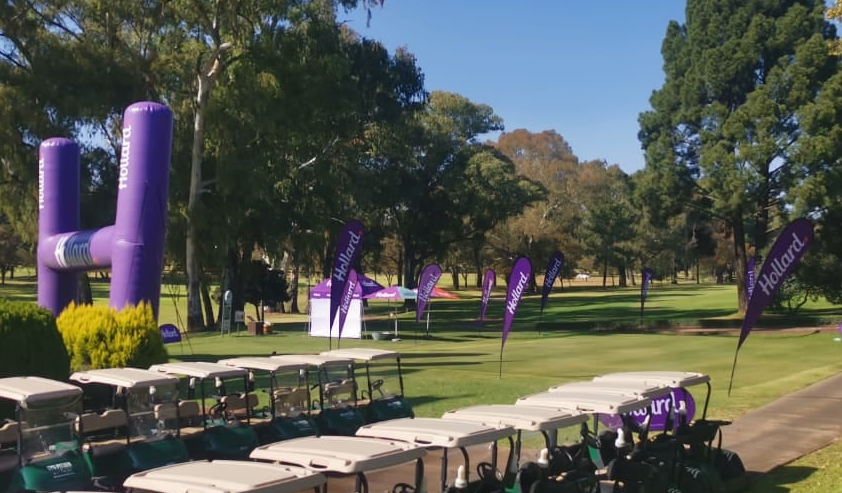
The annual IING President’s Golf Day was once again fiercely contested amongst a combination of fellow insurers and intermediaries alike, on the 19th of May 2021 at Wingate Country Club, Pretoria East. Hollard Pretoria branch was once again the headline act by way of lead sponsorship for this prestigious event and made sure that the course was truly painted “PURPLE” - joined by the likes of Brolink, OMI, Bryte, CLC, King Price and Tracker. |
 |
|
The players were greeted on a rather crisp winter morning and the greenkeeper at Wingate Country Club Mr. Pieter Cooper prepared a challenging but yet forgiving course set up with some very auspicious pin placements. The format for the competition was: • Better-ball Stableford with one (1) score to count Light refreshments were supplied on various sponsored holes to keep the festivities going and the competitive nature of all in the insurance industry was done by the way side every so often as to not dampen the spirits. Although the pandemic has placed a huge burden not only in our industry but a country as a whole – great memories and stories were shared over a few refreshments and light supper followed by the brief prize giving as to adhere to all Covid-19 protocols. We look forward to yet another year of celebrating the inaugural IING Presidential golf day in 2022 |
 |
| Can Sasria honour claims of up to R30bn? |
|
You can sail a 22-foot yacht across the Atlantic by yourself if things go right, but you will struggle to survive if they don’t. The man holding the helm at the South African Special Risk Insurance Association (Sasria), managing director Cedric Masondo, has just sailed into a huge storm in a boat that is probably too small to reach land without serious damage. Sasria’s latest annual report creates the impression that the recent unrest, looting and vandalism will create the biggest challenge the association has ever encountered since its establishment in the late 1970s. |
 |
|
THE PAST, PRESENT AND FUTURE OF RISK ENGINEERING |
|
Written by John Patch, Senior Risk Engineer at Indwe PAST: Pre-COVID Crisis The insurance industry, which has gone through high and lows, has traditionally been a sure bet. Through many of the disasters all around the world, the global insurance market has remained resilient. The insurance market recovers from disasters through: • Collective accumulation of insurance premiums into global underwriting markets (major investors or financial institutions). • Sound investments (hedging – property market). • Increasing premiums post-disaster (the majority must pay for few significant global events or claims) to the end user, as a result of these disasters. Insurance and insurable interest was a prerequisite to doing or staying in business and it became part of the due diligence framework. Professionals were employed to look at ways of limiting exposure to insurers through complex structures and wording, and foreseeing the extreme inevitable disaster. The insurance market, in order to protect its investment value, started imposing risk management, risk engineering and standards of audit and self-governance as a means of protecting the insurable value, both for itself and the client base. Clients were encouraged to spend fortunes on protection measures, including financial mechanisms, physical protection, and policies, procedures and systems. When losses were fortuitous, insurers would pay out (After all, wasn’t that the reason for taking out insurance?) but when their interests weren’t 100% protected, the standards of protection weren’t 100% or the market hardened, insurers would take action such as imposing further rules of protection, deductibles, and threatening clients with coming off risk. The domestic market, including life, home owners and householders, is also being continually squeezed for increased premiums (15% increase vs a 6% GDP increase) without any grounds of justification. An increase in costs was going to be a hard sell going forward, particularly when head counts have been slashed and with the advent of technology replacing humans. |
 |
 |
| Redefining the role of the broker in a digital age |
|
Technology, data, cultural and behavioural change of the consumer is transforming the role of the broker – and the importance of advice – in South Africa’s intermediary insurance market. Soul Abraham, Old Mutual Insure’s Chief Executive for Retail Insurance examines the fascinating disruption of the intermediary market and its implications for dramatically improved customer service in the fourth industrial revolution. Remote control In today’s digital era customers expect instant and ubiquitous service and this is driving innovation within the global insurance industry. Insurers are leveraging technology and data to roll our previously undreamed off capabilities. These innovations are also redefining the broker’s capability to give advice to customers and significantly improve the customer experience. Long before the COVID-19 lockdown, understanding the customers’ behaviour has been key to building the technology solutions and products of the future. Emerging customer culture is redefining the structure, priorities and capabilities of the insurance industry. COVID-19 has only increased the pressure – and urgency – for the industry to deploy technology and data to support customer challenges and goals – remotely. | Read more | |
 |
How do I become a member?
The cost to become an IING member is minimal per annum. Download the application form.